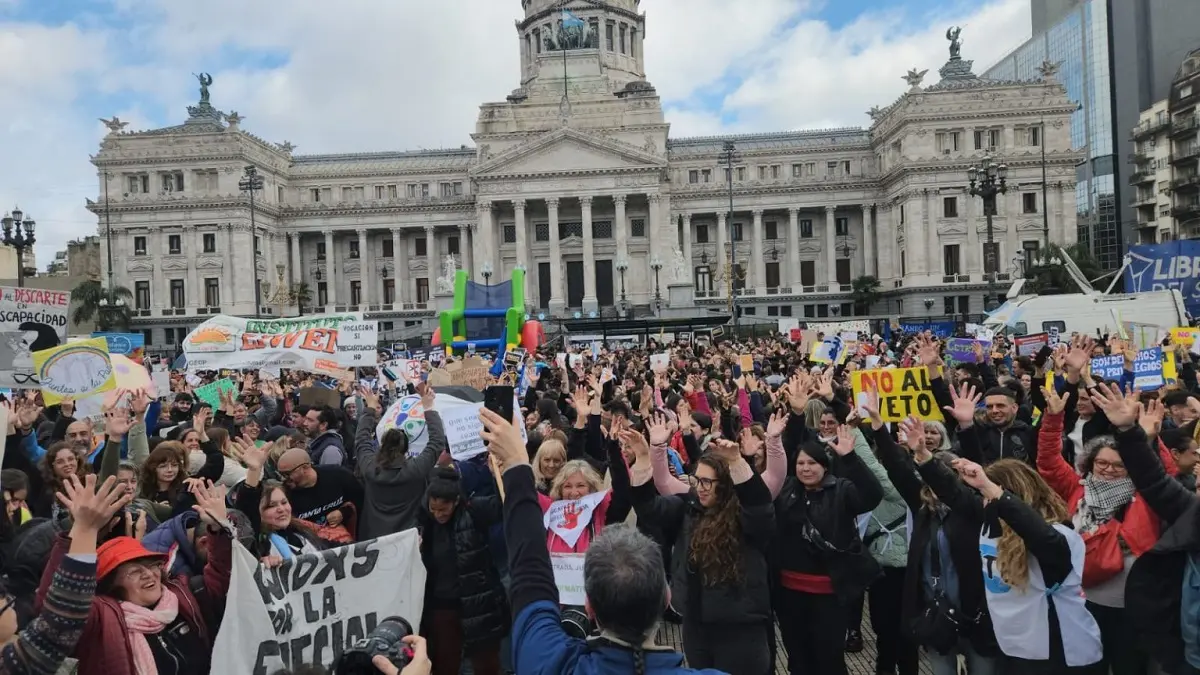








Argentinean President Javier Milei Accused of Censorship After Press Blockade
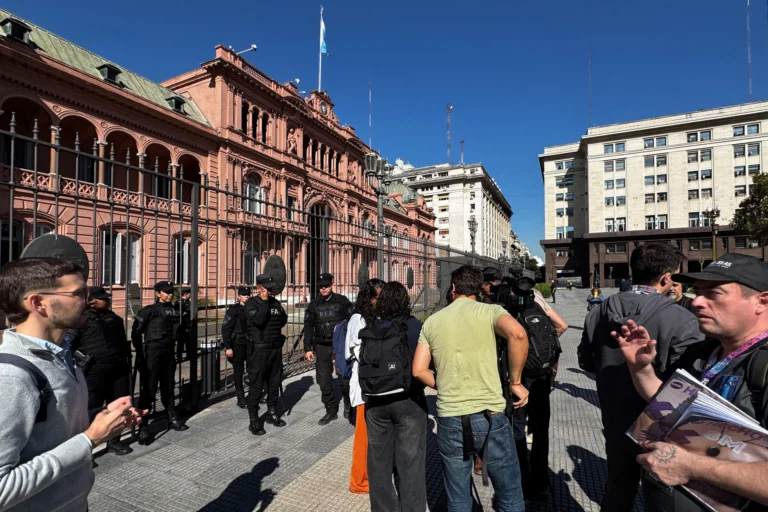
The Association of Argentine Journalistic Entities (ADEPA), which brings together 180 news organizations, expressed its “utmost concern” at the decision by Javier Milei’s government to block accredited journalists’ access to the Casa Rosada, headquarters of the Executive Power. Photo: EFE.
April 23, 2026 Hour: 5:18 pm
🔗 Comparte este artículo
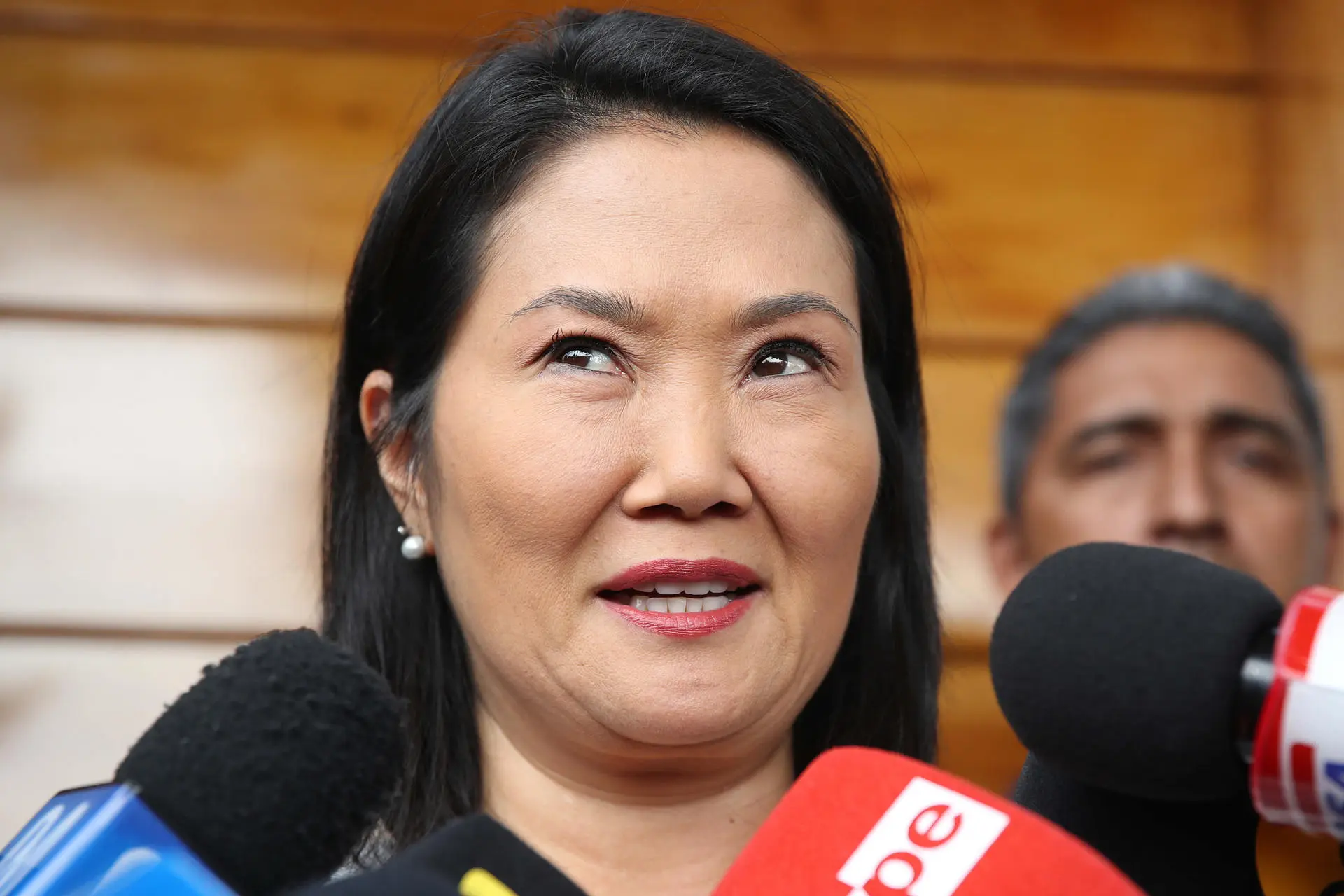
Argentina’s Congresswoman Marcela Pagano today filed a criminal complaint against President Javier Milei for blocking accredited journalists’ entry to the Presidential Palace.
Argentina’s national congresswoman, Marcela Pagano on April 23 has filed a criminal complaint against President Javier Milei for impeding access to accredited journalists at the Casa Rosada, the official seat of the Argentinean Government.
In her formal accusation, the legislator emphasized that it “is not private property”, underscoring the public nature of the institution and the fundamental right of citizens to be informed through the press.
RELATED: Milei Seeks to Eliminate Argentina’s Primary Elections
The judicial text also names Javier Lanari, the Secretary of Communication and Media, and Sebastián Ignacio Ibáñez, the head of the Military House, as responsible parties.
Pagano characterized the decision to ban journalists as lacking legal and administrative basis. She further described it as causing “irreversible damage” to the republican system and to the professional exercise of journalism in the South American country. The Congresswoman explicitly stated that this “prohibition” constitutes a clear violation of freedom of expression and represents “the first step to silence any dissenting voice”, highlighting serious concerns about the state of democracy and public transparency under the current administration.
Text reads: “I denounce criminally the President @JMilei for preventing accredited journalists from entering Casa Rosada, an unprecedented event since the return of democracy. Casa Rosada is not privately owned, and much less a President or his henchmen can decide whether the building is open to the press. The prohibition of journalists’ exercise of freedom of expression is the first step to silence any dissenting voice, a situation we have experienced in Argentina during our country’s darkest moments.”
The Executive Allegations
The recent prohibition was officially justified by allegations of a presumed case of “illegal espionage” linked to the filtration of videos in local media.
As a preventive measure, authorities proceeded to disable the fingerprint access of all accredited press workers, according to official sources. This swift and sweeping action has been met with skepticism by journalistic organizations and Human Rights advocates, who question the proportionality of such a measure in response to alleged leaks.
The measure generated a strong wave of international criticism, particularly because the disabling of access occurred just weeks after other critical media outlets were similarly banned. The complaint filed by Pagano suggests that the implicated officials could have incurred in crimes such as abuse of authority and non-compliance with the duties of a public official.
The situation at the governmental headquarters remains tense, with accredited journalists awaiting a judicial resolution that would allow them to resume their daily work. This ongoing restriction not only hampers the work of journalists but also deprives the Argentinean public of timely and direct information regarding the operations and decisions of its Government, further eroding trust in State institutions and raising alarms about the future of press freedom in Argentina.
Author: Laura V. Mor
Source: Agencies